MOULDS
Carved into wood
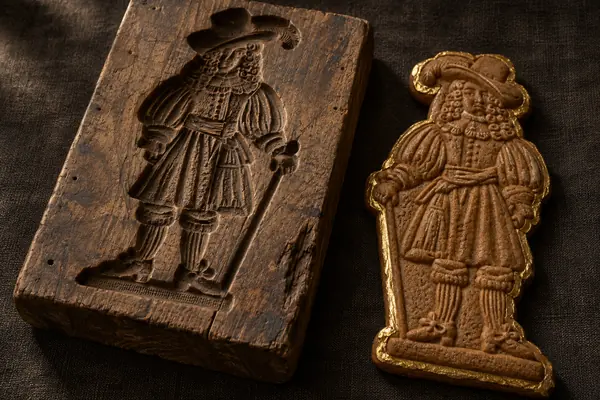
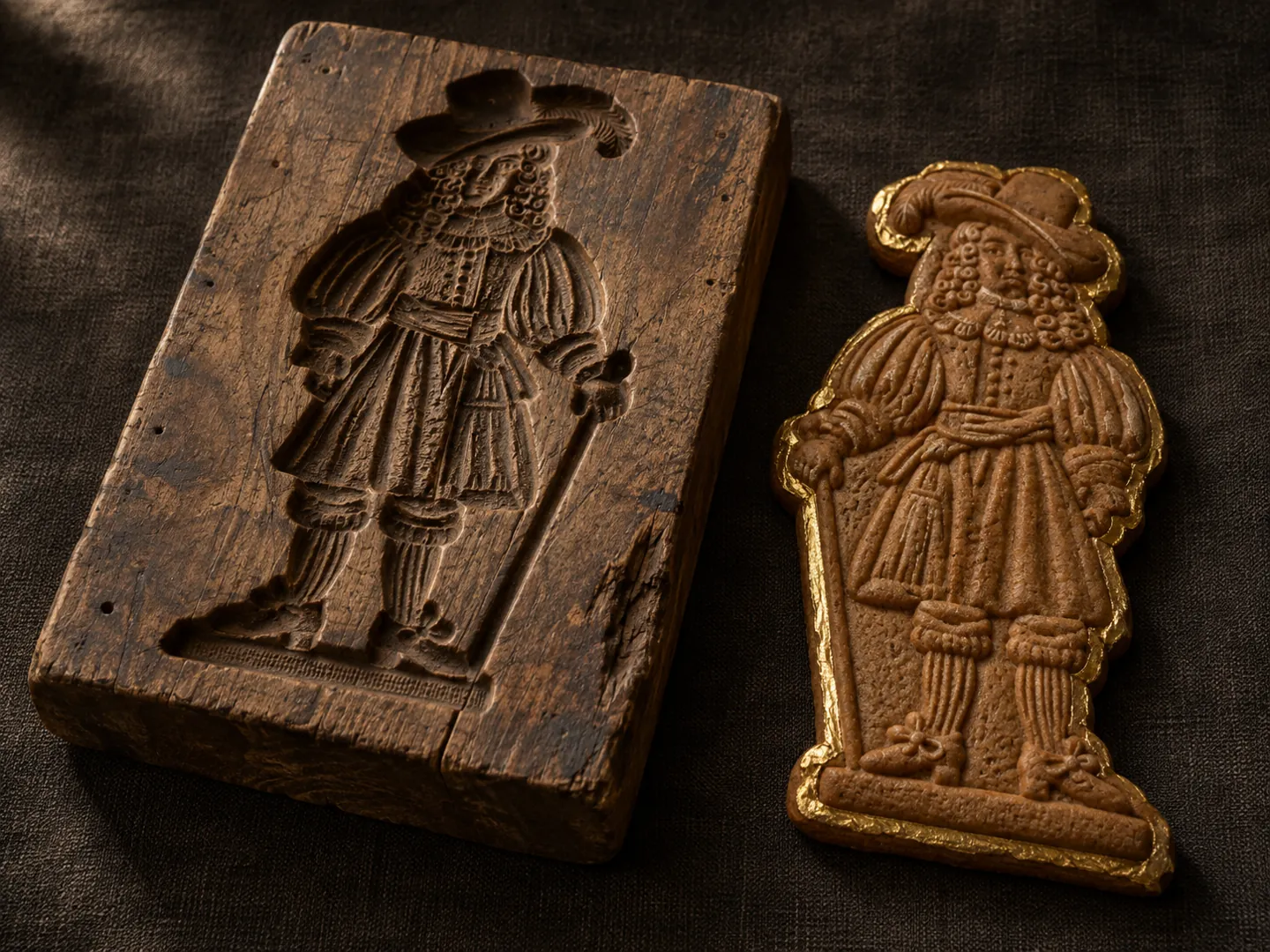
The V&A says culinary moulds were carved in intaglio, usually in boxwood or fruitwoods, to shape gingerbread and sugarwork from the 16th century onwards.
Read the history
WHAT THE COLLECTIONS SHOW
CARVED, NOT CUT the older way to shape it
AI-generated image, not a photograph of a real person or place.
The gingerbread man is older than the cutter.
Museum collections hold the carved wooden moulds once used to stamp figures into gingerbread for fairs, and folklore archives hold a whole family of runaway bakes that a fox nearly always catches.
THE SHORT ANSWER
Figures were pressed, not cut,
and the best were finished in gold.
MOULDS
The V&A says culinary moulds were carved in intaglio, usually in boxwood or fruitwoods, to shape gingerbread and sugarwork from the 16th century onwards.
Read the historyFAIRS
Museum Wales says gingerbread was sold at fairs from medieval times until the 20th century. Pieces topped with gold leaf were called fairings.
See the numbersTHE TALE
In the 1875 tale of the Gingerbread Boy, he outruns everyone until he meets a fox, the same ending many older runaway-bake stories share.
Meet the runaways
HOW TO READ A MOULD
Gingerbread moulds turn up in UK museum collections. A few details help you read one when you see it on display.
The V&A explains that moulds were carved in intaglio: the design is cut into the block, so the dough comes out raised.
Many moulds are carved twice. A French example at the Museum of English Rural Life has a lady on one side and nine small figures on the other.
The V&A says hardwoods were usual, mostly boxwood or fruitwoods. Its two German moulds from 1680 to 1720 are pearwood; one from an East Hendred bakers' family at MERL is beech.
MERL notes gingerbread from moulds like these was often gilded afterwards, and Museum Wales says gold-leaf pieces were called fairings.
TWO NUMBERS WORTH KNOWING
One figure from a folklore archive,
one date from a children's magazine.
13 tales
Runaway-bake tales in one folklore collection
D. L. Ashliman's collection gathers 13 tales of this type, from Norway, Germany, England, Ireland, Scotland, the USA and Russia.
FOLKTALES · PITT
May 1875
The Gingerbread Boy in St. Nicholas Magazine
The American version, cited from St. Nicholas Magazine, volume 2, has a little old woman bake a gingerbread boy who jumps out of the oven.
THE TALE · 1875
Source: D. L. Ashliman, The Runaway Pancake, folktales of type 2025, University of Pittsburgh.
MEET THE RUNAWAYS
The Gingerbread Boy belongs to a folktale family where a bake escapes and is chased. Pick one to see where its printed version comes from. The bar shows how early that printed source is.
From D. L. Ashliman's collection of folktales of Aarne-Thompson-Uther type 2025, The Runaway Pancake, University of Pittsburgh.
A SHORT HISTORY
The Museum of English Rural Life says gingerbread has been enjoyed in Britain for hundreds of years, since ginger arrived around the 11th century with recipes for spiced bread. Biscuits called fairings were baked and sold at medieval fairs.
By the 18th century, MERL says, gingerbread was always readily available, and moulds like its French example were commonplace across Western Europe in the 19th century. One English mould in its collection came from a family who had been village bakers in East Hendred for 200 years.
In conversation
With carved wooden moulds. The V&A says the design was carved into the block, usually in boxwood or fruitwoods, and the dough pressed in to take the shape.
Museum Wales says pieces of gingerbread with gold leaf applied on top were called fairings. MERL describes fairings as biscuits baked and sold at medieval fairs.
The version in D. L. Ashliman's folktale collection is cited from St. Nicholas Magazine, volume 2, number 7, May 1875.
No. Folklorists class it with tales of type 2025, The Runaway Pancake. Ashliman's collection includes a Norwegian pancake, a Scottish bannock, an Irish cake and an American johnny-cake.
The V&A holds two German pearwood moulds dated 1680 to 1720, one showing a man playing a drum. MERL's French mould with a lady and nine figures is 19th century.
Each figure on this page comes from the sources below.
ABOUT THIS NAME
doodlegingerman.com is part of the DoodleSale portfolio. It isn't in an auction right now, but you can ask about leasing it.